About

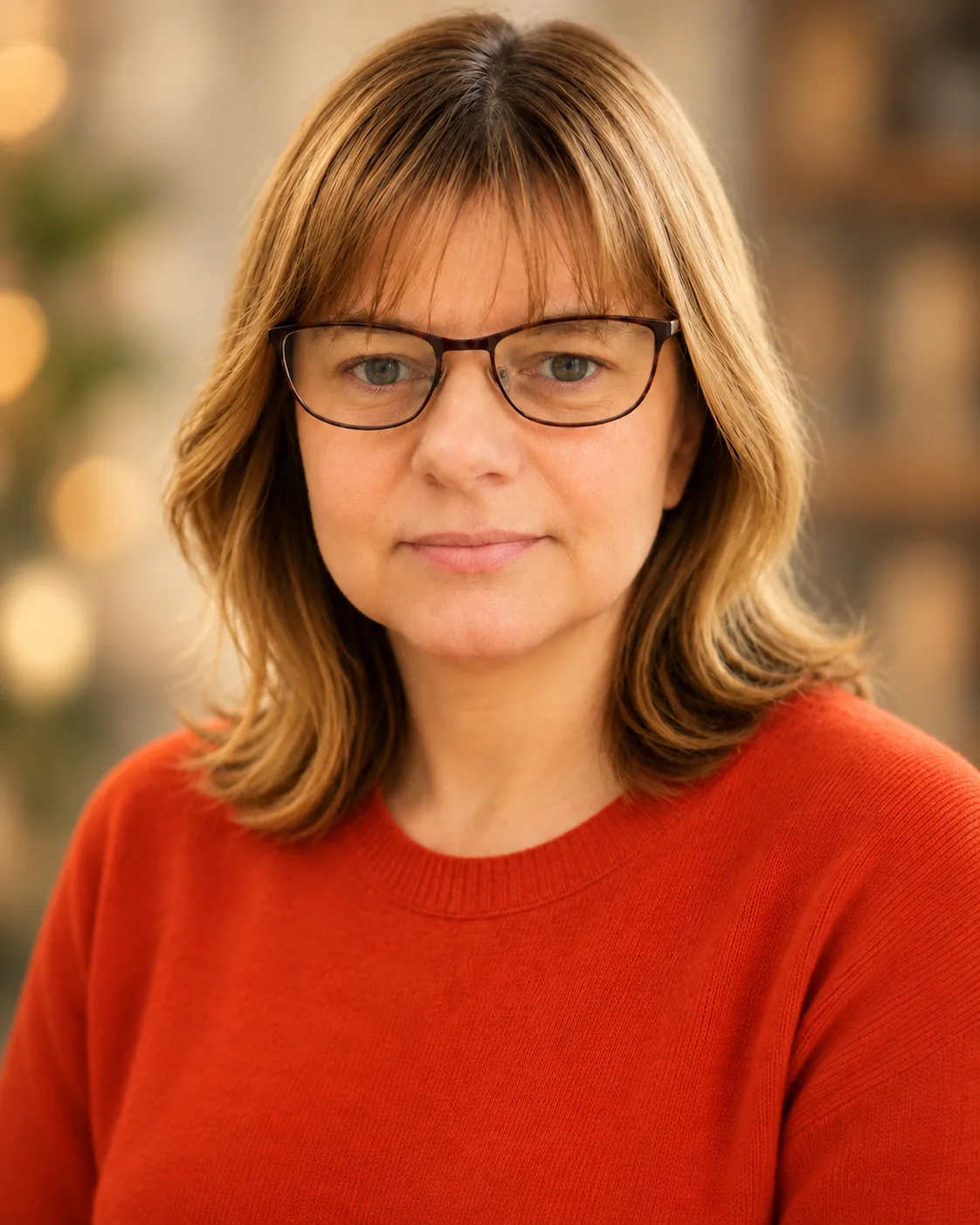
A Conversation with Susan Hooper

On where Eversfloe began, ten years of writing and rewriting, the characters who refused to stay still, and why finishing the book finally became something that could not wait.

The author

Behind Eversfloe

A conversation about the long road from a dark little scene written in Wales to a novel of almost 240,000 words, and the companion story now growing out of the same world.

Susan Hooper
Susan Hooper

Where did Eversfloe come from?

The very first seed of Eversfloe was nothing like the finished book.

Back in around 2014, when I was still living in Wales, I wrote a short piece about someone imprisoned at the bottom of a deep well. There was no Kingdom, no Veil, no hidden archipelago, just a dark character in a dark place for his own dark reasons.

For a few years, that piece existed entirely on its own.

It was only later that I realised it belonged somewhere larger, and I began fitting it into what would eventually become Eversfloe. From there, the world grew around it, the Kingdom, the Veil, the Mages, the Rebels, and all the characters whose lives eventually became tangled together.

I quite like the fact that such a huge story began with something so small and claustrophobic.

Did the story change a lot over the years?

Very much so.

I used to take part in NaNoWriMo, and Eversfloe was originally going to be three separate books. One November I wrote roughly the first third, then the following year I drafted the next part, and a year later I wrote the final third.

Between Novembers, I edited, rewrote, edited and rewrote again. I also put the story down for long stretches of time, then came back to it with fresh eyes.

Once I had three years of drafts, I printed the whole thing out, wrote all over it, pulled it apart, rebuilt it, and then did that again, many times, over several years.

The ending was always where I was heading, but the journey towards it changed enormously. Reworking the beginning after I already knew the ending was particularly tricky, and eventually I added both a prologue and an epilogue.

The basic skeleton of the story was there quite early, but over time the plot became much more structured and the characters became far more complete, both physically and psychologically.

It really did grow into itself over the years.

Which character surprised you most while writing?

Lyriana probably surprised me the most in terms of how much she had to grow.

At the beginning, she still has a lot of growing up to do, but she begins to find her own voice and become much more sure of herself as the story develops. I don’t really mean that she simply becomes more mature, it’s more that she gradually comes into her own.

Allig was probably the most fun to write.

He had a habit of taking me off on all sorts of tangents, usually because once I started writing him, he seemed to have very definite ideas about where he wanted to go next.

Why did you choose England in 1800 as part of the setting?

I have been fascinated by the Victorian era for as long as I can remember. I studied Victorian Literature at university, and originally I thought Eversfloe would be set during that period.

As the story developed, though, I realised I needed to move backwards into the Georgian era. I wanted the Industrial Revolution to be changing people’s lives, but I also wanted travel to remain slow and difficult. I certainly didn’t want modern technology getting involved. Imagine someone turning up at Eversfloe on a hovercraft or a jet ski. No, absolutely not!

The period was important for Ardel’s story too. At the beginning, I needed him to come from a family in desperate circumstances, and the illness affecting them had to be serious enough to force him to leave everything he knew in the hope of finding help elsewhere. There were no antibiotics, clean drinking water could not be taken for granted, and poverty could make an already dangerous illness even more frightening.

Places such as Beamish Museum have helped keep the world of mining communities turning over in my mind. I also lived in the South Wales valleys for a time, so I already had a strong sense of the kind of landscape and community I wanted Ardel to come from.

The setting ended up giving me exactly the contrast I wanted. Albion is harsh, industrial and familiar, while just a few days away by sea is a world nobody there knows exists.

Eversfloe is a very big novel. Did you always know it was going to be nearly 240,000 words?

Absolutely not.

The rough draft was around 150,000 words, and then I edited a lot out. After that, I realised I had another problem. I love writing dialogue, so I can happily have characters talking for pages while forgetting that the reader also needs to know what the room looks like, what people are doing, what they are feeling, and all the things that turn dialogue into an actual scene.

So I added that detail in.

Then, of course, I edited it back again.

For quite a while, I had the book down to what felt like a much more sensible length. It was only during the final edit and rewrite that it grew again, and I was genuinely surprised when it came out at almost 240,000 words.

There is a natural midpoint where I could have divided it into two books, and I did seriously consider it. Financially, it probably would have made sense too. I could have published two books of around 120,000 words each rather than one very large paperback.

But I didn’t want to split the story.

Part of that was practical, because I didn’t want to use another couple of ISBNs unnecessarily, but more importantly, Eversfloe had become one complete novel in my head. I wanted readers to be able to follow the whole journey in one book.

The downside is that the paperback is physically huge and expensive to print, so I fully expect Kindle and Kindle Unlimited to be the more accessible way for a lot of readers to experience it.

What does the Veil mean to you as a story device?

Initially, the Veil was simply somewhere to hide.

I kept thinking about what would happen if one society had access to something another desperately wanted. If England was suffering from plague, for example, and somewhere else had medicine that could cure it, I don’t think people would politely leave them alone. They would probably be invaded, pressured, exploited and forced to produce more and more.

Magic would be no different.

If Albion discovered a place where people could do things they could not, Eversfloe would become valuable very quickly, and not necessarily for good reasons.

But you can see the other side too. If you knew there was a cure, or a power that could save people, would you really accept being told you could never have it?

As the story developed, I realised the Veil needed to be more than a barrier. It had to have a cost.

Magic in Eversfloe works within a kind of balance. Power is never entirely free. If something immense is being maintained, something must be sustaining it, and something must have been given in return.

That idea became much more important as I wrote.

The Veil protects Eversfloe, but protection always raises another question.

What does it cost to keep something hidden?

Which character was hardest to write?

Probably Cai.

It took me a while to find his place in the story because I needed him to be quite flexible, but his position and personality made that difficult.

There were moments when I needed him to behave one way, then later to see the world from a different angle, and that shift did not always come naturally to him as a character.

So I had to work quite hard to make those changes feel believable rather than convenient.

I can’t say too much more without wandering into spoilers, but Cai was definitely one of the characters who made me stop, rethink and rewrite more than once.

What was it like finally publishing Eversfloe after working on it for so many years?

Weirdly quick, in the end.

I became ill towards the end of 2023. What followed was a long stretch of tests, appointments, medication and waiting lists, even on an urgent pathway. By then, I had already realised I was probably going to need an operation.

Eventually I was placed on the waiting list for open heart surgery. I met the cardiothoracic surgeon, and in February 2026 I had the operation.

Having Eversfloe to disappear into gave me somewhere else to put my mind during all of that. In the run-up to surgery I was very symptomatic, and I began to have that horrible thought, what if?

If my life had ended then, Eversfloe would have been left sitting in a folder in my living room, printed out in a very poor state, unfinished after all those years.

I regretted not having finished it sooner.

By July 2026, when I was on the road to better health, something had changed. I threw everything I had into one final edit and rewrite.

After ten years, it was time to finish it.

And once I made that decision, everything suddenly moved very quickly.

What was the hardest part of finally letting the book go?

There comes a point where the story stops being entirely yours.

For years, Eversfloe existed privately. I could change things, rewrite scenes, protect the characters and keep the whole world to myself. Once people start buying it, though, they are entitled to have their own opinions about it.

That felt strange.

I’m very protective of my characters, so letting them go out into the world was probably harder than I expected.

But finishing Eversfloe also opened another door.

There is one line later in the book that left a thread dangling. I pulled on it, and that thread became Across the Winter Sea, a companion novel set in the same world.

That one feels different to write because Eversfloe itself already exists. The world, the rules, the history and the atmosphere are already there. I only have to find the story and bring it onto the page.

Of course, “only” is doing a lot of work there.

I still have to finish writing it, then edit it, then rewrite it, probably more than once.

But I don’t want another ten-year gap between books.

What can readers expect from Across the Winter Sea?

Across the Winter Sea is a standalone companion novel to Eversfloe, set years before the events of the main book.

It is, in many ways, Claron’s story.

The novel takes him to the most northerly Isle of the archipelago, to the remote fishing village of Selwick on the coast of Farreach. It is a place shaped by winter storms, dangerous seas and the small magics woven into ordinary life.

At the centre of the story is five-year-old Nell, whose magic begins affecting the magic of everyone around her in ways nobody can explain. Simple workings weaken, stronger magic becomes unpredictable, and the more power used near her, the more dangerous the consequences seem to become.

Elda, the village healer, realises she has reached the limits of her experience and sends for Claron, hoping he may understand what is happening.

Instead, he finds a frightened child, a village increasingly uneasy about the magic it has always trusted, and a problem that forces him to confront parts of his own past.

The book also gives readers much more of Claron’s backstory. Some of that history is touched on in Eversfloe, but here there is room to explore it properly, including the people and experiences that shaped him long before we meet him in the main novel.

It is a smaller, more contained story than Eversfloe, but still very much part of the same world.

What would you most like readers to take away from Eversfloe?

I think, more than anything, I’d like readers to come away thinking about how much of who we are is shaped by what we have been told, where we come from and the people around us, and how difficult it can be to step outside that.

Claron, Ardel, Lyriana and Allig all come from very different places, but each of them has to question something they once accepted.

For Ardel, it is the world he thought he knew. For Lyriana, it is the life and responsibilities that have been laid out for her. For Allig, it is the anger and loyalty that have shaped him. Claron has lived long enough to understand that even wisdom does not make you incapable of mistakes.

I think the book is also about looking again, at people, at systems, at your own assumptions, and realising that things are rarely as simple as they first appear.

If readers finish Eversfloe still thinking about those characters and the choices they made, I’d be very happy with that.

✦ ✦ ✦

Eversfloe took ten years to become the book it is. The next story is already under way.

Across the Winter Sea